

What Are Your Rights If A Police Sniffer Dog Stops You During Sydney WorldPride

Sydney Gay and Lesbian Mardi Gras and WorldPride 2023 are upon us and along with the parties, rainbows, glitter, and glam comes another Oxford Street sight, the NSW police sniffer dog.
According to an NSW Police statement, a high-visibility police operation will be in effect until March 5. This will include general duties officers assisted by specialist units, including the Public Order and Riot Squad, Operations Support Group, Mounted Unit, Dog Unit, PolAir, Licensing Police, Traffic and Highway Patrol Command and Police Transport Command.
In a conversation with Star Observer, Katie Green, Managing Principal Solicitor of the Inner City Legal Centre which provides free community legal services,聽 shared what you should be aware of when approached and stopped by a sniffer dog.
First Things First
According to Green, when a sniffer dog is approaching you are not required to remain in the area unless you are under arrest.
鈥淭he risk of course is if you move away and police form a view that you are acting suspiciously, choosing to leave the scene, then they might form the view that they have a suspicion that you may have drugs or some other contraband item on you, which leads to grounds for them to perform a search.鈥�
When a sniffer dog makes a detection, meaning it has detected the scent of drugs in an area, it will sit down.

Green says, however, that the sniffer dog sitting, alone, is not grounds to justify a search. At this point, police may ask if you have anything on you, or ask about what you are doing today. However, while you are not required to answer these questions, not answering could create 鈥榬easonable suspicion鈥� depending on the officer.听
You are able to ask 鈥淎m I free to leave?鈥� and 鈥渢hey may say 鈥榶es鈥� if a dog sat down and they can’t form 鈥榬easonable suspicion鈥濃�櫬�
According to Green, police 鈥済enerally don’t have a right to ask鈥� for your ID at this point.听
鈥淎sking for ID before they actually have any evidence that you’ve committed a crime, they cannot do.鈥�
However, if you are searched, Green says it is best to provide ID.听聽
鈥淥therwise they might need to detain you for the purpose of establishing your identity.鈥�
The Search
At the time of the search, you are able to say, 鈥淚 do not consent, but I will comply.鈥� This is for the police record.听
Speaking about what is involved in a search, Green explained, 鈥淎n ordinary search involves going through the pockets of your jackets, the pockets of your pants, going through your bag.
鈥淎 strip search is the next level of search, which is, under the law, a much more serious search.听
鈥淭hat would include anything that involves removal of clothing, observation of the skin, observation of genitals, being asked to take anything off. That’s when an ordinary search has turned into a strip search.鈥澛�
During a strip search, police are 鈥渘ot supposed to touch you and they’re not supposed to do any kind of cavity searches, you do need to have an officer of the same gender, and you’re supposed to be afforded the right amount of privacy.鈥�
Green continued, 鈥淭hey can run their fingers through your hair, they can ask you to open your mouth, but they can’t put their fingers inside your mouth. They can do a visual inspection of your body, but they certainly are not allowed to touch any genitalia, and they’re not allowed to do any internal inspections.鈥�
鈥淔ewer than 25 per cent of those searches actually result in drugs being found,鈥� Green said.
鈥淭hree-quarters of people are actually being searched by police after a sniffer dog detection and nothing at all was found.鈥�
鈥淚t鈥檚 not an exact science at all.鈥澛�
Some Things to Remember
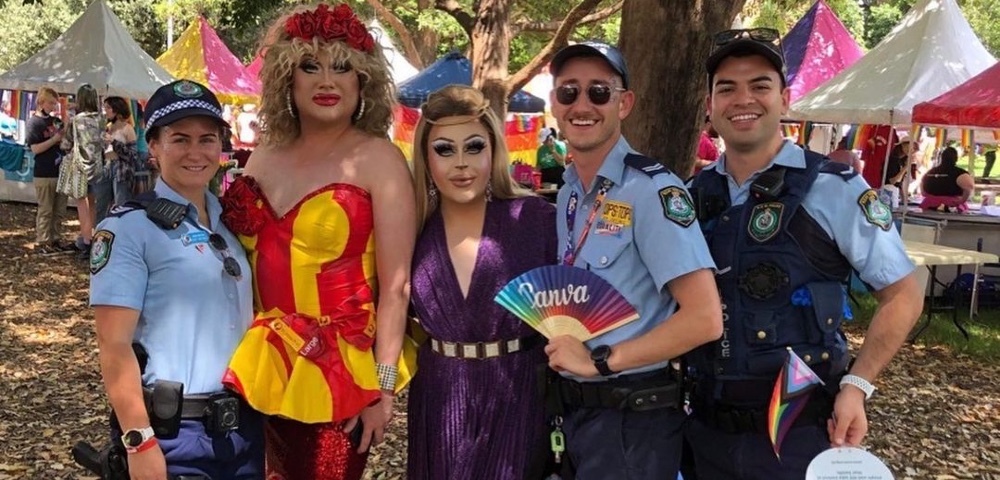
LGBTIQ+ Liaison Officers (GLLOs):聽These are police officers that have special training in regard to LGBTQ sensitivities and often identify as Queer.听
鈥淚t is a smart thing to ask for, Green said. 鈥淛ust to slow things down and also to alert that officer that you do identify and come from that community and they ought to be thinking about those issues in their dealings with you.鈥�
According to Operation WorldPride 2023 Commander, NSW Police Assistant Commissioner Tony Cooke, 鈥淵ou’ll be able to identify our LGBTIQ+ Liaison Officers by their bright yellow sleeve and rainbow GLLO badge, but if you need assistance at any time, any NSW Police officer will be happy to help you.鈥�
Body Cameras: According to Green, asking the officer if their body camera is on and working is another way of protecting yourself. It also lets the officer know that you know your rights.听
鈥淚f there was a complaint and there was no body cam footage, you’d be able to say 鈥榳ell, I asked鈥欌��,Green said.听
Document and film: Anybody is allowed to film anything in a public place. This includes clubs and bars. Have a friend or passerby film the interaction. This will protect you and is important if you go to court.听
Seek Assistance Immediately:鈥淒on’t downplay it,鈥� Green stresses.
Look for the Fair Players, a team of specially trained volunteers that provide legal and safety information, monitor police operations, and provide support to people who have been searched or questioned by police. You can ID them by their FairPlay logo shirts.
The Fair Players will be close to police drug operations at the four major parties including the Mardi Gras Party, the Domain Dance Party, the Bondi Beach Party, and the closing party, Rainbow Republic.听
鈥淸FairPlay] is there at the parties, because we acknowledge that this can be a really stressful and traumatic experience for people. So the advice, unfortunately, is to get through it as best as you can, and then seek assistance,鈥� Green says.
The NSW Police Minister and the NSW Police were contacted for this story and we will include their comment when we receive it.


